Radical Auteur: The Cinema of Ari Aster
Edited with Bruce Isaacs. In preparation for Bloomsbury Academic (2027)
Radical Auteur: The Cinema of Ari Aster presents the first full-length, comprehensive, scholarly study of one of the most influential filmmakers working in contemporary American cinema, Ari Aster. From his first feature, the modest A24 production, Hereditary (2018), Aster was recognized as a distinctive voice, sensibility, and formalist working within what was a transforming American independent film scene. If the ‘indie’ movement comprising the 1990s and 2000s had largely lost its caché in the last decade, a new form of authorial and industrial independence had taken hold within the American film industry. This volume presents Aster as the exemplary voice of this mode of American filmmaking. In Aster’s experiments with the genres of horror, folk tales, and the recent surrealist-avant-garde work, Beau is Afraid (2023) and expansive genre experiment Eddington (2025), he is indeed a barometer of what seems currently possible in the domain of distinctive, auteur-oriented cinema.
A24: Culture, Aesthetics, Identity
Edited with Bruce Isaacs. In preparation for Edinburgh University Press (2026)
In 2012, Daniel Katz, David Fenkel, and John Hodges founded a new independent film company, A24 Films. Just over a decade later, with a vast filmography ranging from intimate character portraits to genre films, growing television library and Academy Awards, under their belt A24 has become the most recognised and celebrated North American independent entertainment company of the contemporary moment. Building on the growing number journal articles attending to the company and its key filmmakers, A24: Culture, Aesthetics, Identity will be the first book-length study of the company, its sensibility, and role within contemporary Western popular culture.
Gentrifying Scenes: Cities on Screen
In preparation for Oxford University Press (2024)
Registering a screen city as gentrified, un-gentrified, or gentrifying is more than a matter of locating a film or show as taking place in this or that (part of) town, or under the conditions of class-based urban change. Gentrification draws and redraws borders across our screen cities. It maps out, and reroutes, trajectories for places and people. It divides characters, styles, and narratives as apparently belonging within or bound to types of cityscapes. Why are romantic comedy and creative-class dramedy cities assumed gentrified and thereby ‘safe’ for their protagonists? What is it about the un-gentrifiable city of the organized crime drama that makes its dangers so tantalizing for an audience that is (assumedly) not involved in gangland crime? How does the tourist gaze at play in a film like Le Fabuleux Destin d’Amélie Poulain (Jeunet, 2001) or a series like Emily in Paris (Netflix, 2020–) presuppose a gentrifier’s eye? And how might a gentrified style function in a remake like the Australian high-school drama Heartbreak High (Netflix, 2022–) which encourages a nostalgic engagement with a neighborhood’s working-class past within its glossy genericized present? And what should we make of the expanded use of the term “gentrification” as cultural critique in the contemporary moment? With chapters organized along the analytic foci underpinning these questions, this book ultimately suggests that gentrifying scenes are foundational to the construction, and our encouraged comprehension, of mainstream screen cities and the actual cityscapes they virtualize. Reading mainstream screen cities through the lens of gentrification means coming face to face with who and what we have come to expect to find where and when. Gentrifying Scenes: Cities on Screen offers insights as to why.
The Body Swap Film
Edited with Wyatt Moss-Wellington. In press with Berghahn Books
The Body Swap Film is the first book-length study dedicated to an enduring tradition in popular cinema: films in which characters swap bodies with another person or entity. Essays address notable examples such as the Freaky Friday films as well as considering the global popularity of body swap media, including all manner of bodily transformation across comedies, horrors, and other body swap genres. Contributors also investigate body swapping in progenitor media and emergent narrative forms, including television, videogames, digital media, online identities, and avatar relationships. While firmly grounded in film studies, this collection reaches across disciplines with emphases on gender theory, race theory, trans scholarship, transnational media studies, and philosophy.
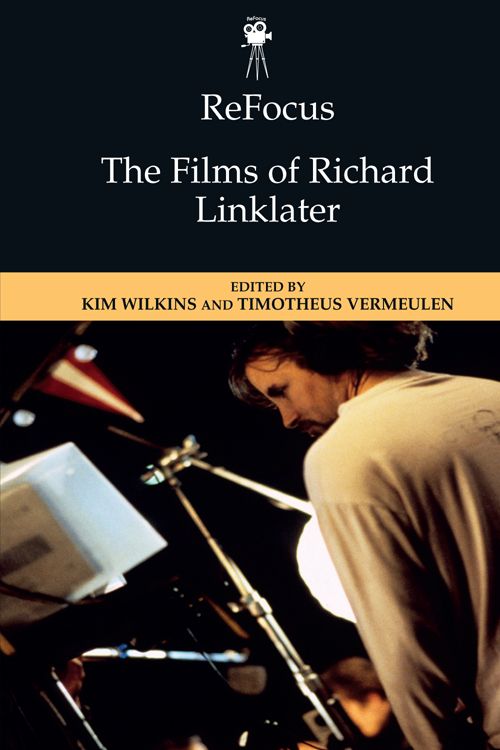
ReFocus: The Films of Richard Linklater
Edinburgh University Press, 2022
Richard Linklater is a popular American filmmaker who is widely celebrated for the breadth of his oeuvre. Over the past three decades, Linklater has directed more than twenty features, ranging from non-linear independent films to Hollywood genre entertainment. Despite the popularity of Linklater’s rich and varied body of work—and perhaps also because of this generic diversity—he remains under-represented in critical and scholarly fora. ReFocus: The Films of Richard Linklater addresses this oversight, bringing together twelve original essays attending to Linklater as a filmmaker whose work engages with contemporary debates in American politics, gender, youth, and activism as well as significant concepts in film studies, including time and duration, rhythm, and movement. Together these essays form a dialogue on Linklater’s ongoing role in contemporary American popular culture, and the impact his work has on discussions within (and beyond) film studies. Edited by Kim Wilkins and Timotheus Vermeulen.https://edinburghuniversitypress.com/book-refocus-the-films-of-richard-linklater.html

American Eccentric Cinema
Bloomsbury Academic, 2019
Since the late 1990s a new language has emerged in film scholarship and criticism in response to the popularity of American directors such as Wes Anderson, Charlie Kaufman, and David O. Russell. Increasingly, adjectives like quirky, cute, and smart are used to describe these American films, with a focus on their ironic (and sometimes deliberately comical) stories, character situations and tones. Kim Wilkins argues that, beyond the seemingly superficial descriptions, American eccentric cinema presents a formal and thematic eccentricity that is distinct to the American context. She distinguishes these films from mainstream Hollywood cinema as they exhibit irregularities in characterization, tone, and setting, and deviate from established generic conventions. Each chapter builds a case for this position through detailed film analyses and comparisons to earlier American traditions, such as the New Hollywood cinema of the 1960s and 1970s. American Eccentric Cinema promises to challenge the notion of irony in American contemporary cinema, and questions the relationship of irony to a complex national and individual identity. https://www.bloomsbury.com/au/american-eccentric-cinema-9781501336911/
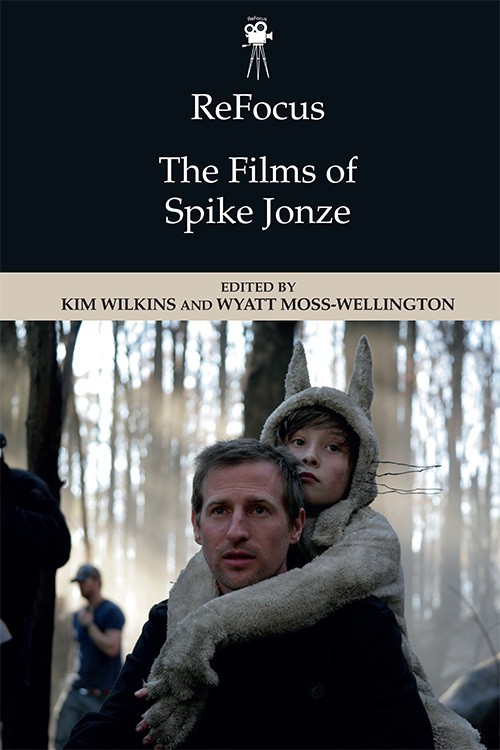
ReFocus: The Films of Spike Jonze
Edinburgh University Press, 2019
ReFocus: The Films of Spike Jonze is the first collection of essays on this important and original contemporary filmmaker. It looks at his ground-breaking work in both features and short forms, exploring the impact of his filmmaking across a range of philosophical and cultural discussions. Edited by Kim Wilkins and Wyatt Moss-Wellington https://edinburghuniversitypress.com/book-refocus-the-films-of-spike-jonze.html
 Kim Wilkins